Life is often filled with challenges that can leave a mark on our body. Muscle pain, stress and tension have become an integral part of our everyday life. However, there is a simple and natural way to relieve these discomforts - the use of points on the body against pain.
How do spots on the body work?
Points on the body, also known as acupressure points, play a key role in traditional Chinese medicine. These points represent points on the body where energy is concentrated, and by pressing certain points we can stimulate the flow of energy through the body's meridians. This natural approach can help to release blockages, reduce pain and improve the general condition of the body.
Benefits from points on the body:
-
Pain Relief: Points on the body can provide instant relief from muscle and joint pain.
-
Stress reduction: Stimulation of certain points can relax the nervous system, reducing stress and improving emotional well-being.
-
Improving sleep: Using points on the body before bed can help relax the body and facilitate sleep.
-
Energy boost: Activating certain points can increase the flow of energy through the body, providing a sense of vitality and energy.
How to use points on the body:
- Draw a careful map of the points on the body you want to stimulate.
- Apply gentle pressure to each point using your fingertips.
- Adjust the pressure according to your own comfort.
- Rest and allow the body to respond to the stimulation.
Acupressure is based on the idea that the body's energy, known as qi, flows along certain pathways in the body, called meridians, and that stimulating points by pressing along these meridians will balance your qi, or life energy.
Choose the acupressure point associated with the pain you want to relieve. There are hundreds of different acupressure points, each associated with a specific part of the body. Explore different acupressure points and find the ones that best match the symptoms you are experiencing.
Press firmly several times for about 30 seconds, moving your fingers in a circular or up-and-down motion.
Acupressurists sometimes use their palms, wrists, elbows or even feet to apply pressure to their clients. Acupressure techniques may include firm pressure, stirring, rapid rubbing, or tapping on pressure points.
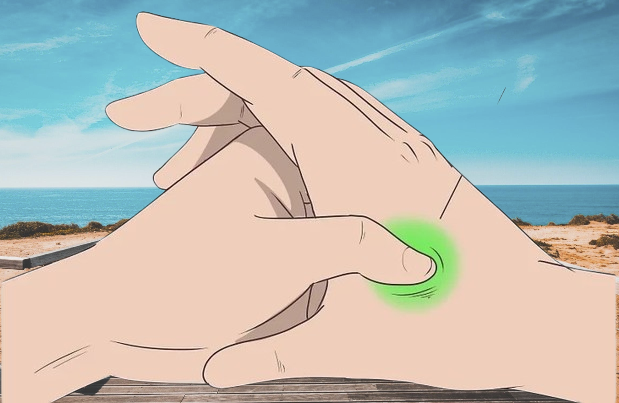 |
This acupressure point is known as He Gu, or LI4. It is one of the most commonly used acupressure points and can also be used to treat facial pain, toothache and neck pain. |
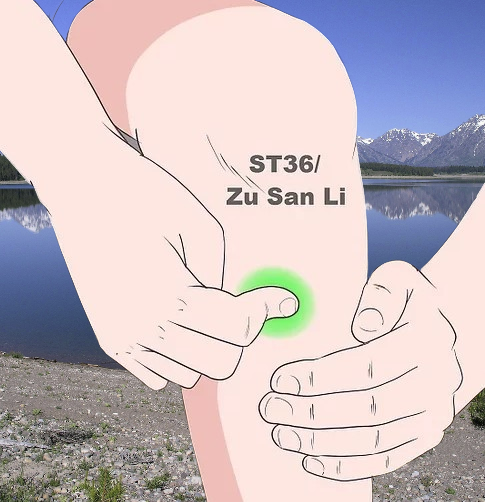 |
Massage the muscle on the outside of the calf to reduce fatigue. This spot, known as ST36 or Zu San Li, can be found by measuring 4 finger widths from the bottom of the kneecap along the outside of the lower leg. Using downward pressure, massage this area.
To check if you are in the right place, move your foot up and down. You should feel the muscle moving in and out as the foot moves. Zu San Li is also used to treat nausea and vomiting, as well as to promote longevity.
|
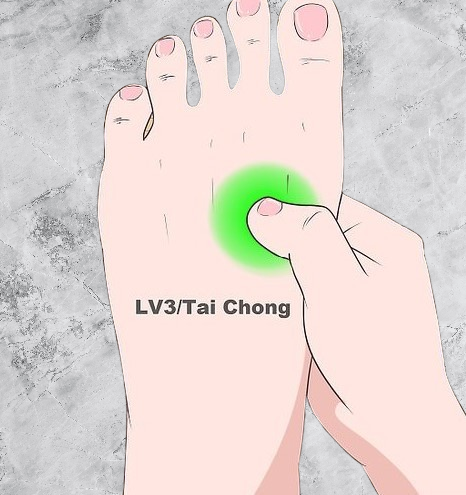 |
Find the indentation between your first and second toes to reduce anxiety. Start in the indentation where the big toe and second toe meet, then slide the toe toward you. Acupressure point LV3, or Tai Chong, is located just before you reach the next bone. Massage this area with firm pressure.
Tai Chong is also cited as a point that relieves menstrual cramps, digestive problems, high blood pressure and insomnia.
|
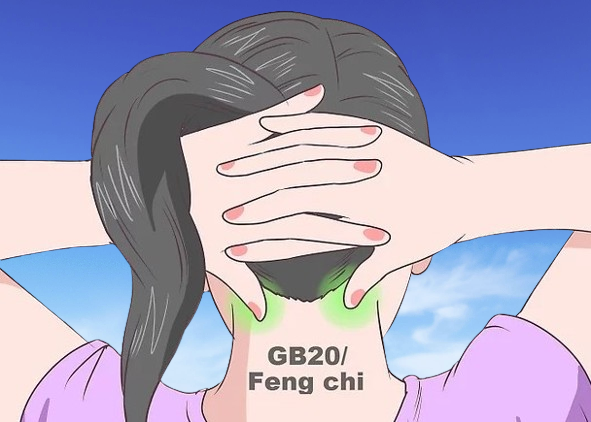 |
Relieve headaches by pressing where the neck muscles meet the skull. To find this spot, feel for the bone behind the ear, then follow the groove back to where the neck muscles connect to the skull. This is acupressure point GB20, also known as Feng Chi. Use your thumbs to press gently but firmly.
You can gently rotate your thumbs or rock them up and down to enhance the effect. Feng Chi also affects other conditions, including blurred vision, fatigue, migraines, and cold or flu symptoms.
|
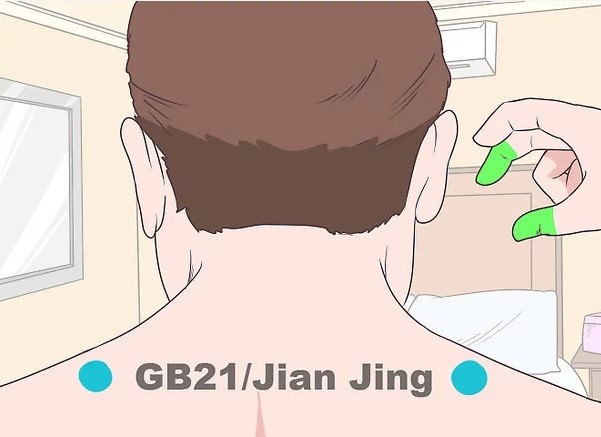 |
Squeeze your shoulder muscles tightly to reduce stress and neck pain. This acupressure point is known as GB21, or Jian Jing. Locate the area about halfway between the shoulder cuff and spine, then use your thumb and middle finger to squeeze this muscle firmly for about 30 seconds.
This method is also considered effective for relieving headaches, toothaches and facial pain. Jian Jing is said to induce labor, so use this technique with caution if you are pregnant.
|
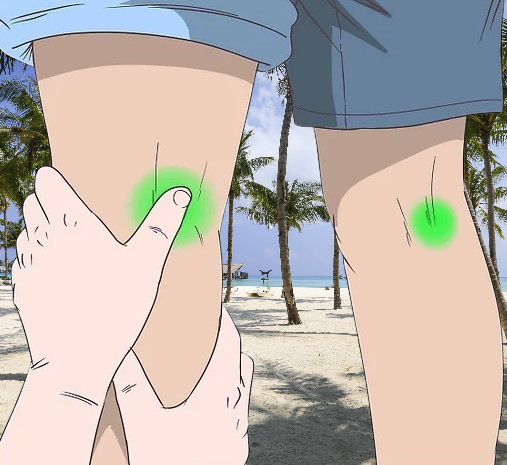 |
Relieve leg and hip pain by pressing inward from the back of the knee. The soft spot on the back of the knee is considered beneficial for hip problems, muscle atrophy and stomach pain. Press firmly inward at the center of the knee.
If you cannot reach this place yourself, you may want to ask someone to help you.
|
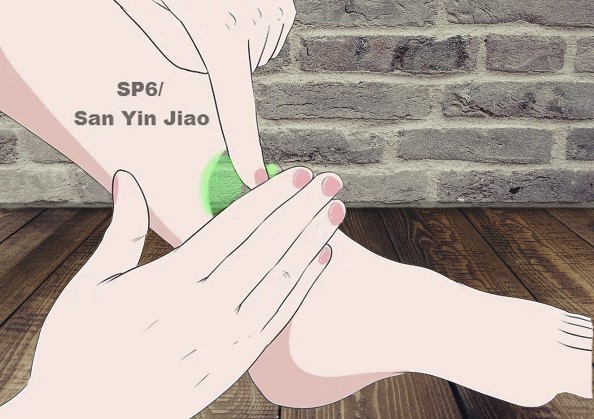 |
Relieve menstrual pain by finding acupressure point SP6 on your leg. This point is located on the inside of the leg, about 4 finger widths above the ankle. Using your thumb, apply deep pressure behind the tibia and massage the area for 30 seconds.
SP6, or San Yin Jiao, is also used to relieve urological and pelvic disorders, as well as insomnia.
|
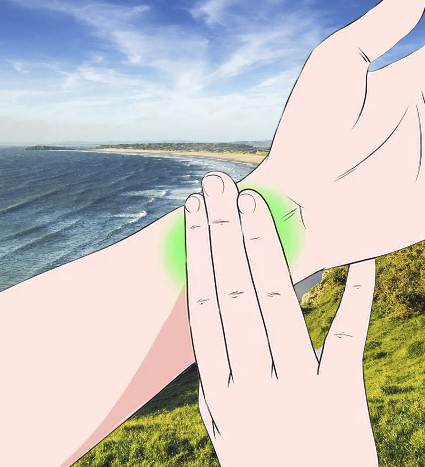 |
Relieve nausea by applying pressure between the tendons on the inside of the forearm. Extend your hand with the palm facing up, then measure approximately 3 finger widths towards the elbow, starting at the wrist. This is the P6 or Nei Guan acupressure point. Press firmly between the two tendons and massage the area.
Nei Guan is often used to relieve motion sickness and stomach problems.
|
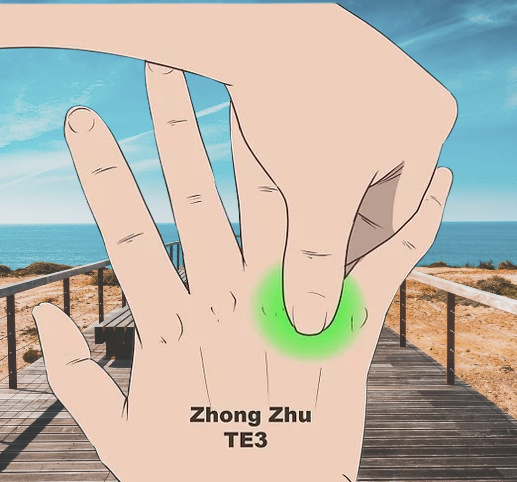 |
Massage between the fourth and fifth toes to reduce tension in the neck. This acupressure point is known as Zhong Zhu or Triple Energizer 3 (TE3). Find the hollow between the fourth and fifth fingers, or between the ring finger and little finger, then massage this area firmly for up to 30 seconds.
TE3 is often used to treat temporal headaches, shoulder and neck tension, and upper back pain.
|
Subscribe to receive the latest updates on radiation protection and natural medicine.
No spam
Unsubscribe anytime
Share this knowledge
Help others learn more about natural space harmonization.

