
3.1. Explanation of the principle of the bio-fitback process
The biofeedback effect is based on the principle of feedback from normally unconscious bodily functions. This essentially scientific method is based on the translation of biosignals into electrical impulses that can be processed in an amplified form with the help of a computer with adequate software. The process was developed with the goal that a person can learn to establish conscious control over his psychological system and the signals of various bodily functions, such as:
The biofeedback effect is based on the principle of feedback from normally unconscious bodily functions. This essentially scientific method is based on the translation of biosignals into electrical impulses that can be processed in an amplified form with the help of a computer with adequate software. The process was developed with the goal that a person can learn to establish conscious control over his psychological system and the signals of various bodily functions, such as:
- Musculature relaxation
- Body temperature
- Cardiac functions, breathing, blood pressure
- Skin transmittance value
When an optical or acoustic indicator is activated, i.e. when they give feedback it is possible to regulate these functions. In principle, it is followed by a graphic display via a computer that controls the exact measurement values from specially developed sensors.
Every change in oscillatory information is recorded in the human body and stimulates the reaction of the vegetative nervous system. When recognizing an unpleasant or harmful frequency, the organism first activates the sympathetic nervous system as a protective reaction. If the amount of energy use, blood pressure and heart rate change, the organism can adapt to external influences.
One external stimulus as a biological influence can lead to an increase in blood flow, which enables the organism to react faster. We ourselves experience sympathetic activation quite clearly during intense stimuli, which is identified with a general reaction.
In accordance with man's own sensibility, this also applies to harmful electromagnetic radiation and negative geobiological fields. With the exception of more sensitive people, the spontaneous reaction of the vegetative nervous system occurs under the influence of waves that can be physically received. Using the sensory measurement technique with modern bio-feedback devices, it is possible to register even the smallest parameters of the organism's stress increase, while the curves describing the signals show the same.
Activation of the parasympathetic nervous system can be marked both subjectively and objectively. Reactions of the parasympathetic system have been recorded through the feeling of peace or through the deactivation of the activity of the sweat glands. In such situations, there is an accelerated heartbeat and breathing, conditioned by the reaction of the sympathetic system. Also, the activation of the parasympathetic system can be experienced as a feeling of heaviness and nausea in the stomach.
It is less known that essentially, as a precursor to a stress reaction, organic changes occur in the body. When the body senses unbearable information or influences, it tries to electrophysically protect itself, reducing the conductivity of negative signals. This practically manifests itself through an increase in skin permeability. The activity of the sweat glands increases the electrical ability to connect and indicates the situation, making it measurable.
The electrical ability to connect is related to the sympathetic reactions that activate the organism. These curves are considered during electrostress research. The faster the heart beats, the faster the immediate reaction can be.
Research shows that the heart rate changes less during short-term changes in external influences. With long-term exposure, the reactions are more pronounced and rhythmic.
Permanent effects of fields with a harmful effect, according to this, can be the cause of noticeable changes in heart beats. In accordance with previous research, and on the basis of the external influences of fields with a harmful effect, different reactive types can be distinguished.
One group reacts with an excessive acceleration of the pulse, while the other reacts with an underestimation of heart rate variability. Both reactions can be evaluated as stress-responses of a healthy organism which, if persistent, can significantly increase the risk of disease.
Since the mid-80s, modern science has been interested in the topic of heart rate variability (heart rate, abbreviated as VSF). VSF is based on an optimal joint play of the sympathetic and parasympathetic nervous system. That is why VSF is a measure of the overall sensitivity and reactivity of the organism to internal and external stimuli.
The autonomic nervous system is responsible for the adaptability of the organism to environmental information fields. VSF cannot fall directly under the influence of one's own organism and therefore can serve as a reliable indicator, e.g. Physical stress.
Every change in oscillatory information is recorded in the human body and stimulates the reaction of the vegetative nervous system. When recognizing an unpleasant or harmful frequency, the organism first activates the sympathetic nervous system as a protective reaction. If the amount of energy use, blood pressure and heart rate change, the organism can adapt to external influences.
One external stimulus as a biological influence can lead to an increase in blood flow, which enables the organism to react faster. We ourselves experience sympathetic activation quite clearly during intense stimuli, which is identified with a general reaction.
In accordance with man's own sensibility, this also applies to harmful electromagnetic radiation and negative geobiological fields. With the exception of more sensitive people, the spontaneous reaction of the vegetative nervous system occurs under the influence of waves that can be physically received. Using the sensory measurement technique with modern bio-feedback devices, it is possible to register even the smallest parameters of the organism's stress increase, while the curves describing the signals show the same.
Activation of the parasympathetic nervous system can be marked both subjectively and objectively. Reactions of the parasympathetic system have been recorded through the feeling of peace or through the deactivation of the activity of the sweat glands. In such situations, there is an accelerated heartbeat and breathing, conditioned by the reaction of the sympathetic system. Also, the activation of the parasympathetic system can be experienced as a feeling of heaviness and nausea in the stomach.
It is less known that essentially, as a precursor to a stress reaction, organic changes occur in the body. When the body senses unbearable information or influences, it tries to electrophysically protect itself, reducing the conductivity of negative signals. This practically manifests itself through an increase in skin permeability. The activity of the sweat glands increases the electrical ability to connect and indicates the situation, making it measurable.
The electrical ability to connect is related to the sympathetic reactions that activate the organism. These curves are considered during electrostress research. The faster the heart beats, the faster the immediate reaction can be.
Research shows that the heart rate changes less during short-term changes in external influences. With long-term exposure, the reactions are more pronounced and rhythmic.
Permanent effects of fields with a harmful effect, according to this, can be the cause of noticeable changes in heart beats. In accordance with previous research, and on the basis of the external influences of fields with a harmful effect, different reactive types can be distinguished.
One group reacts with an excessive acceleration of the pulse, while the other reacts with an underestimation of heart rate variability. Both reactions can be evaluated as stress-responses of a healthy organism which, if persistent, can significantly increase the risk of disease.
Since the mid-80s, modern science has been interested in the topic of heart rate variability (heart rate, abbreviated as VSF). VSF is based on an optimal joint play of the sympathetic and parasympathetic nervous system. That is why VSF is a measure of the overall sensitivity and reactivity of the organism to internal and external stimuli.
The autonomic nervous system is responsible for the adaptability of the organism to environmental information fields. VSF cannot fall directly under the influence of one's own organism and therefore can serve as a reliable indicator, e.g. Physical stress.
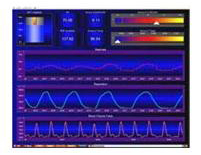 The BioTrace+ software used in this research is mainly capable of providing information about VSF. it remains to be determined whether the selected VSF values in the time-limited measurement procedures established in this research provide reliable information.
The relatively small number of tested subjects does not allow a pure mathematical-statistical assessment. For 100% statistically reliable information, the number of respondents, as well as the number of measured values, must be greater.
The starting point for evaluating the measurement data of individual tested persons is based on the so-called Baseline - a report of a neutral period. In this research, it was the period before the installation of the QHRS biopyramid in the houses of the tested individuals in the main group and in parallel before the installation of the placebo pyramid in the houses of the subjects in the control group.
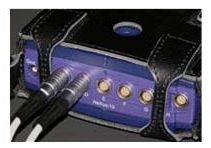
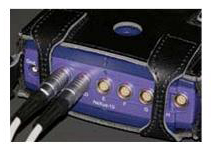
For the biological measurement of the harmonizing effect of the QHRS biopyramid, one of the most modern measuring instruments for bio-feedback is used.
The "NEXUS 10" instrument from the company MIND MEDIA enables the inclusion of the entire range of psychological signals in the area of neurofeedback effect and opens a new dimension for psychological measurements.
BioTrace+ software presents a fast graphic display of measurement values in 3D format, and with additional equipment enables video displays.
Measurement data is accepted in at least 24 copies/minute and then stored. Thus, all measurement data are stored and can be used as desired when evaluating other systematized information, or when using some spreadsheet programs (eg Excel).
In accordance with the overall development, the manufacturer of bio-feedback measurement systems has also developed a "Blue Tooth" connection for the transfer of information from the sensors of the measuring devices to the computer. However, this transmission system can also be viewed critically because it causes additional high-frequency radiation with a frequency of 10Hz.
During biological measurements, the transmitters and receptors must be separated by a special foil, since otherwise the measured information may interfere. The measuring instrument is not installed directly on the subjects, but on the possible distance between the sensors defined by the length of the cable.


