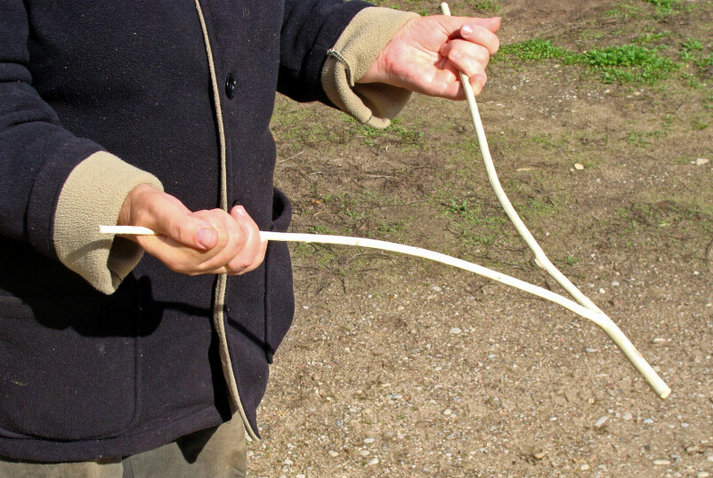
Dowsing is a practice that involves the use of certain instruments, such as dowsing L antennas or plumb bobs, to detect and measure various energy fields or radiations that surround a person, object or space. This practice has a long history and is often used in a variety of contexts, including searching for water, detecting energy imbalances, or identifying other types of energy flows.
Dowry is often used to search for water, and the person who practices dowsing, known as a dowser, uses certain instruments such as dowsing L antennas (also known as forks), forked forks, or pendulums. Here's a basic explanation of how it's usually done:
- Choice of instrument: The dowser will choose an appropriate instrument, usually dowsing L antennas or a plumb bob, to use for energy detection.
- Asking a question: The dowser will focus his question on finding water. This can be a specific question like "Where is the water source?" or similar.
- Walking around the grounds: The dowser will walk around the grounds holding the instruments in a certain way. If he used dowsing antennas, they should respond to energy changes when the dowser approaches the water source.
- Reaction of the instrument: If the dowser is in the place where there is water, the instrument should show certain reactions, such as turning the antennas or oscillating the pendulum. These indicators are interpreted as a signal that a water source has been found.