
Twenty-two test subjects, who were included in the research, were chosen in accordance with adequate principles of a random sample of more than thirty volunteers.
Residents of eight residential buildings in three different regions were included in the tests. The basis for inclusion in the experiment was the determination of the existence and action of geobiological fields with a harmful effect and electrosmog on the subject's organism. In each place, there was an equal number of test subjects distributed in parallel to the main and control groups.
The record of the measurements in the pre-research and the division of the subjects into the main and control groups will be described below.
In the distribution of the subjects into the main and control groups, equalization and equal distribution by age and gender was taken into account..
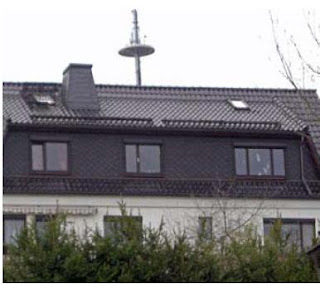
According to the results of this pre-research, the main group included eleven respondents, eleven in the control group as well. Half of the respondents live in a settlement that has a transmitter within a radius of 300 meters. Also, significant tectonic movements were recorded in the same region as a consequence of earlier activities.
Residents of eight residential buildings in three different regions were included in the tests. The basis for inclusion in the experiment was the determination of the existence and action of geobiological fields with a harmful effect and electrosmog on the subject's organism. In each place, there was an equal number of test subjects distributed in parallel to the main and control groups.
The record of the measurements in the pre-research and the division of the subjects into the main and control groups will be described below.
In the distribution of the subjects into the main and control groups, equalization and equal distribution by age and gender was taken into account..
According to the results of this pre-research, the main group included eleven respondents, eleven in the control group as well. Half of the respondents live in a settlement that has a transmitter within a radius of 300 meters. Also, significant tectonic movements were recorded in the same region as a consequence of earlier activities.

\
|
Main group
|
Control group
|
|
House 1
|
House 3
|
|
respondent 1 - men
|
respondent 4 - men
|
|
50-70 years
|
50-70 years
|
|
respondent 2 - women
|
respondent 5 - women
|
|
50-70 years
|
50-70 years
|
|
respondent 3 - women
|
|
|
50-70 years
|
|
|
House 2 - exterior
|
House 4 - exterior
|
|
respondent 6 - men
|
respondent 8 - men
|
|
50-70 years
|
